

- Participation
- Electoral legislation
- Non-editorials
Featured

The Democratic Social Compact – What Is It and What Should It Be?
Featured
- Recent
- Everything else
- Electoral legislation
- Concepts
- About Oagal

Select Page


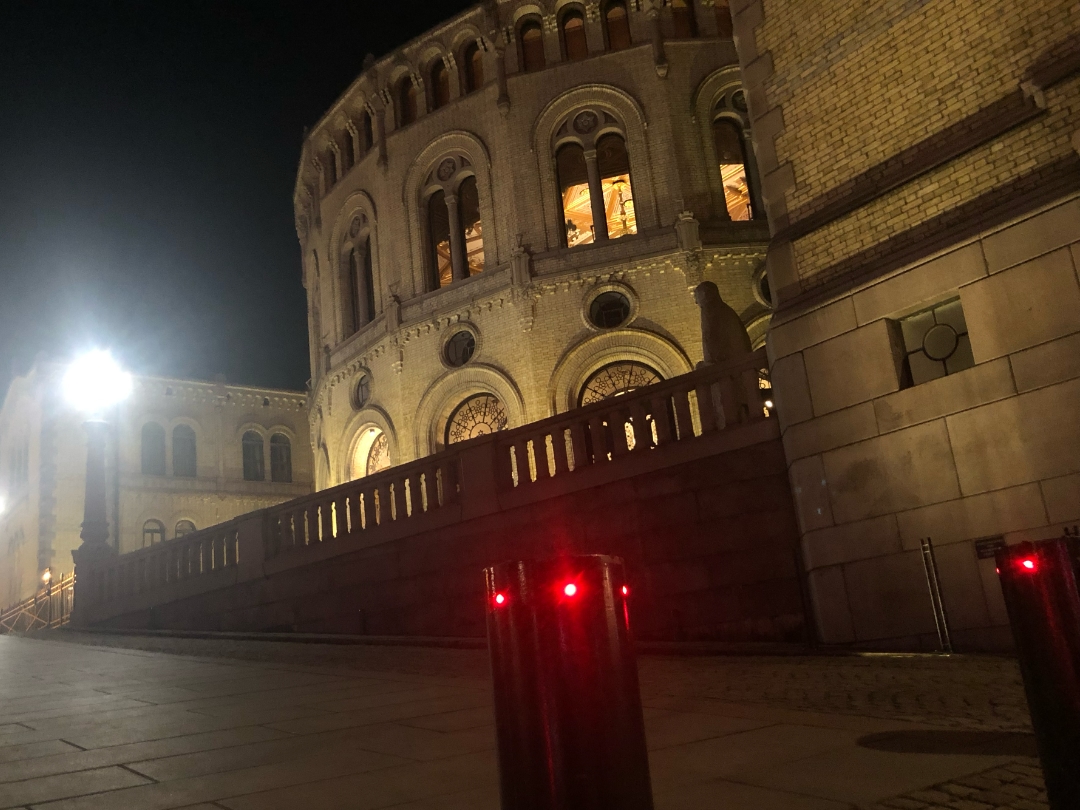
Oagal examines the electoral law. By definition, democracy is a political system where the people govern. In principle, the people can decide through direct democratic processes and through representative democracy. Norway has only a representative democracy, where the people send their representatives to the national assembly, the Storting. Or do they? The Storting states on its website that «through elections, the people appoint politicians who then make decisions on behalf of the people.» This claim is a common assumption, but that does not make it true. In reality, the people in Norway do not vote for individuals, but for parties.
In June 2017, the Electoral Law Committee was established based on the need for strong trust in political institutions, which is essential for a well-functioning democracy. Elected representatives must reflect the will of the people, and elections must be conducted in a trustworthy and proper manner. The committee was tasked with contributing to secure democratic conditions for years to come. But this mandate was not followed by the government or Parliament. The result of the committee’s work was published in Official Norwegian Report (NOU) 2020: 6 *Free and Secret Elections*. The majority (all except one member) supported the introduction of real personal voting in parliamentary elections (page 23). It’s worth noting that the previous electoral law committee also proposed (NOU 2001: 3) introducing a moderate form of personal voting in parliamentary elections. However, the proposal from the new committee had been removed by the time the politically governed administration had submitted the draft legislation Prop. 45 L (2022–2023) Act on Elections to the Storting, County Councils and Municipal Councils (the Electoral Act).
The government, through the Ministry of Local Government and Regional Development, stated that the old Electoral Act (§ 7-2, first paragraph) allowed voters in parliamentary elections to alter the ranking of candidates on the ballot in a form of weak personal voting. However, the ministry (page 92) «considers it fundamentally problematic that voters today make changes on the ballot that in practice have no impact.[…] The ministry still believes that all candidate names on the list should appear on the ballot, so voters can see which candidates the party has nominated.» It could hardly be stated more clearly: Norwegian voters vote for parties, not individuals. Rather than addressing this weakness in elections to the national legislature, the ministry proposed removing even the weak option for personal voting. This became Parliament’s decision in Legislative Resolution 96 (2022–2023), passed on June 6, 2023, sanctioned on June 16, and entered into force on May 1, 2024—with effect from the 2025 parliamentary election.
Thus, the nation’s foremost trustees introduced the closed-list electoral system. The closed party list arrangement gives the parties, collectively, full control over the composition of the Storting, while voters can influence the personal selection only indirectly by voting for a different party.
With this, Parliament reinforced that the Norwegian people vote for organizations in what must be called an organization-based system of representation—not a representative system. Instead of strengthening the already weak personal voting option, it was completely abolished. But this decision alone is not what made 2024 a horrific year for Norwegian democracy and will make 2025 a celebration of the old and established. Norway has a rich variety of small parties. For individuals and groups who, later in life, see the need for change in national politics—for those who oppose the establishment—it is virtually unthinkable to begin a political career within existing parties. Those careers typically begin in youth organizations and evolve into political professions. The alternative is to start new parties—parties that give citizens the chance to elect new individuals to the country’s highest assembly. Rising to the top as a new party is no easy feat. Anders Lange started his own party in 1993. It later became the Progress Party and is now one of the larger parties in Parliament. Riding a European green wave, the Green Party was established in 1988 and entered Parliament in 2021. Other small parties that have won seats in modern times have since disappeared, including the New People’s Party in the 1970s and the Coastal Party around the millennium. The fate of *Patient Focus* remains to be seen—it won a seat in Finnmark for the 2021–2025 parliamentary term.
In such a landscape—dominated by political career paths and the difficulty of establishing new parties—one might expect a vibrant democracy to ease the process for small parties to enter Parliament. New Zealand has become a significant example of how this can be done in modern times. But Norway’s established politicians—or rather their political organizations—did not want such competition. For lists submitted by parties registered in the Party Register that received at least 5,000 votes nationwide in the previous parliamentary election, a list is accepted with the signatures of just two board members from the local branch responsible for the relevant district. Other parties—in practice, small parties—have been legally required to wage a double election campaign. Their candidate lists must be signed by a number of individuals equal to at least one percent of those eligible to vote in the district in the previous election. As if that weren’t enough, parties must also ensure that signatories have not signed other party lists. In practice, this means establishing a safety margin of perhaps an additional 0.1 percent.
Certainly! Here’s a clear and natural English translation:
Also read: The Directorate for Education does not want to see challenger parties at school elections
Norway is a recurring top performer on the so-called Democracy Index from the Economist Intelligence Unit. In the 2023 index—released in 2024, the very year democracy took a hit—Norway achieved first place with a score of 9.81 out of 10. This score is nearly perfect and describes Norway as the ideal democracy. It should be noted, however, that the country does not hold binding, only advisory, referendums. Perhaps Norway *is* the best among the best democracies. If so, the scale needs to be recalibrated after the horrific year of 2024. That was when citizens lost their already limited option for personal votes and faced even greater obstacles to forming party lists for small parties. Alternatively, the country should be ranked much lower—perhaps even down in the group where the United States resides: flawed democracies.

Christian Sømme er Oagals redaktør og demokratiaktivist. Overalt i Norge og internasjonalt møter han mennesker som ikke kan assosiere seg med og føler maktesløshet overfor beslutningene til politikere, offentlig administrasjon og domstoler. Han har etablert Oagal som en uavhengig mediekanal for å dekke disse problemstillingene, oppsummert som «reelt demokrati». Sømme har vært tillitsmann, by- og stedsutviklingsaktivist i en mannsalder, og demokratiaktivist som Medvirkningsombudet (selvutnevnt) fra 2018 og med Oagal fra 2024. (Foto: Thomas Eckhoff)
0 Comments