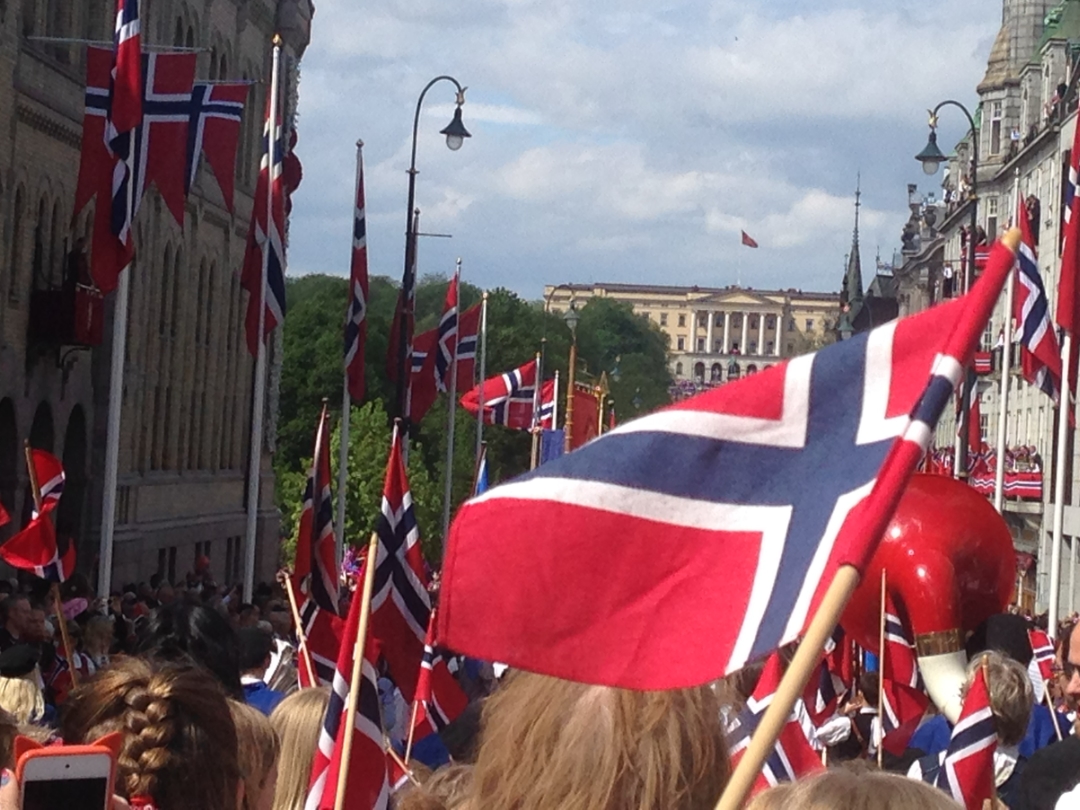
One wonders whether it is right-wing extremist nationalists who are letting the flags fly in the wind here. The labels of right-wing and left-wing extremism are widely misused.
Right-wing extremism is a label we often encounter in public discourse. It is frequently applied to legitimate right-of-center positions by people who themselves hold equally mainstream views on the left—without describing themselves as left-wing extremists for that reason. When leading public officials misuse these terms in this way, it amounts in practice to propaganda that divides the population and attempts to serve their own interests by misleading citizens. Such misuse is a form of politician-driven political extremism.
Publisert: 23. Nov 2024 Revidert: 15. Mar 2026
Honesty is a fundamental principle in democracies. It fosters security, trust, and accountability.
The Norwegian National Encyclopedia (SNL) explains the concepts as follows:
“Right-wing extremism refers to highly radical positions on the political right. The term is used to describe parties, movements, groups, individual activists, and websites. Right-wing extremism is often associated with anti-democratic attitudes, racism, xenophobia, ethnic nationalism, conspiracy theories, authoritarianism—and in some cases political violence. The most well-known ideological currents within right-wing extremism are Nazism and fascism. Some researchers also argue that the so-called counter-jihad movement is right-wing extremist.”
“Left-wing extremism is an umbrella term for various forms of political radicalism rooted in ideologies to the left of parliamentary socialism. The term is used for everything from nonviolent activist movements to groups that engage in terrorism.”
Watch and listen: John Cleese on the benefits of labeling extremism and some good suggestions for who your enemies might be
The right-wing extremism label as manipulation
The impression is quickly formed that the political left labels its opponents as right-wing extremists more often than the reverse.
This reliance on manipulative power language may reflect perceptions within a closed culture, desperation, narcissistic attitudes, casualness, misunderstandings, or attempts to obscure the consequences of politician-driven extremist policies—manifested in voters shifting to the right and in anti-feminist sentiments, as men tend to vote for liberal values to a greater extent than women, who more often support collective solutions. Perhaps even a form of left-wing extremist terrorism?
If the right does not use the extremism label as frequently, it has other stuck-record tendencies. For example, it never seems to let go of the claim that the Red Party wants “armed revolution”.
This may also relate to the tendency in Western democracies to assume that all systems of popular governance were founded with identical purposes, as exemplified by the Economist Intelligence Unit through its Democracy Index. Oagal has previously highlighted differences between parliamentary and republican democracies, where some argue that the United States was founded as a constitutional republic to safeguard liberal freedoms and avoid democratic tyranny as a form of governance.
Read more: The Norwegian electoral system is now “a closed party-list system”
The far right goes a long way in defending these liberal freedoms and is far removed from the social-democratic positions we see in virtually all Norwegian parliamentary parties. Right-wing positions in the United States can therefore easily be perceived as right-wing extremist in Norway—without actually being so.
The importance of confronting politician-driven political extremism
Right-wing extremism and left-wing extremism must be opposed. Unfortunately, these terms are so firmly established—also in the media and academic environments—that political extremism carried out by politicians themselves falls outside the radar. This also contributes to the terms being applied to legitimate positions on both sides of politics—and further reinforces the notion that political views exist along a simple linear axis, whereas reality is more complex.
Read in VG on relationships: Denigration and sarcasm do not foster trust and security
Oagal defines the gradual—and for many largely invisible—erosion of democracy by the political industry as “politician-driven political extremism.” This clarifies the conceptual framework for media, researchers, and our party-elected national assembly, while also helping to reduce misuse of the labels right-wing and left-wing extremism. After all, is it not a form of left-wing extremism to unjustifiably label right-wing political competitors as right-wing extremists—and vice versa?
De fleste av artiklene på Oagal er utarbeidet av redaksjonen. Innholdet fra redaksjonen er det fortløpende redaksjonelle arbeidet i Oagal. Redaksjonen driver undersøkende journalistikk, utvikler ideer til saker og utarbeider artikler ved hjelp av ulike tilgjengelige kilder og verktøy. Meningsbærende innhold og også reportasjer bærer skribentens navn.


0 Comments