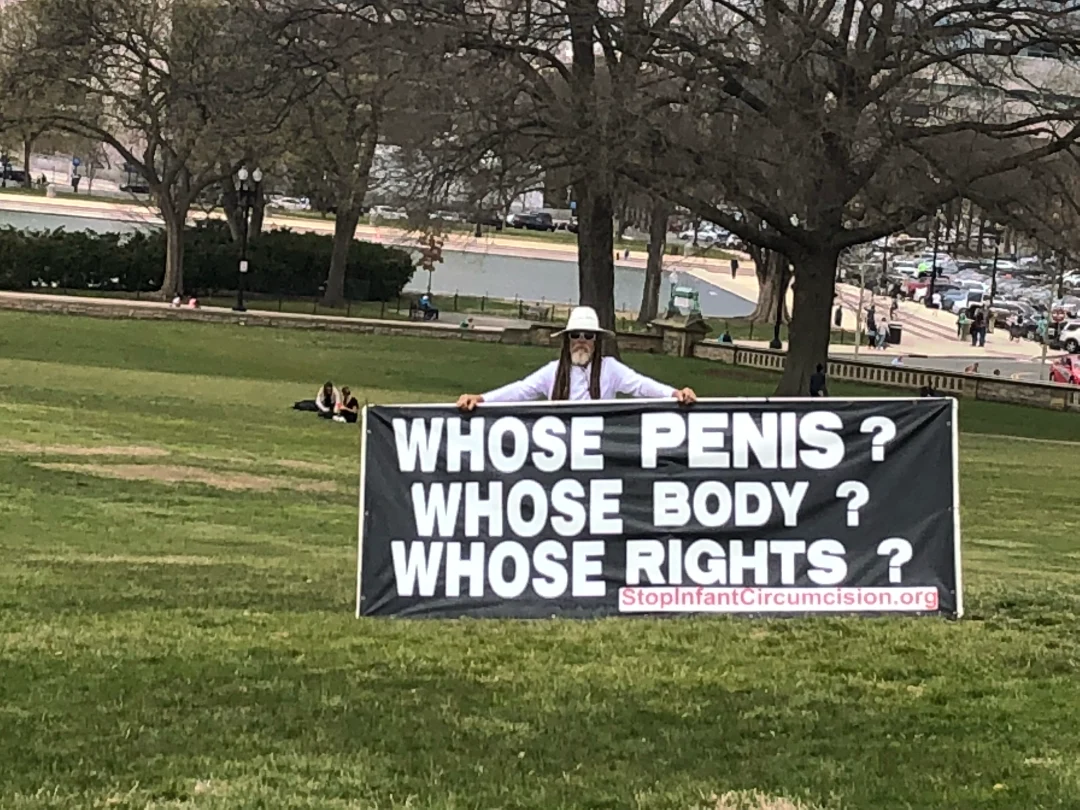
Male circumcision raises questions concerning the body, consent, and power – and therefore also the outer boundaries of democracy.
Male circumcision is often treated as a medical or religious issue. However, the procedure also raises fundamental democratic questions: Who should be allowed to decide on irreversible interventions in children’s bodies, and how should such decisions be anchored in a democratic system?
Publisert: 6. Jan 2026 Revidert: 15. Mar 2026
In Norway, male circumcision has been the subject of a prolonged and demanding public debate. The issue touches on religion, culture, medicine, law, and ethics – and not least, children’s rights. In an international context, it is worth noting that ritual circumcision of infant boys is not a widespread practice in most Western democracies, and that legal regulation varies significantly from country to country.
In Norway, all public health trusts were required from January 2015 to offer ritual circumcision of infant boys. This led to renewed debate, particularly within medical communities and among rights advocates. The discussion has largely revolved around medical arguments for and against the procedure, but also around whether the state should facilitate an irreversible surgical intervention on healthy children who cannot consent themselves.
Circumcision debated
A central part of the circumcision debate was carried out in the Journal of the Norwegian Medical Association in 2015. There, physicians Michael Bretthauer and Erlend Hem argued that male circumcision can provide documented health benefits, including reduced risk of HIV transmission and certain sexually transmitted infections. They referred to large randomized studies from, among other places, South Africa, Uganda, and Kenya, as well as recommendations from the World Health Organization in areas with high HIV prevalence.
Bretthauer and Hem also noted that the complication rate for circumcision performed in healthcare institutions with solid competence is low, and compared the procedure with other surgical interventions that are routinely performed on children in Norway. Their main point was that circumcision is a medical procedure with scientifically documented benefits, and that it should therefore be assessed alongside other health measures.
This view was challenged by the then Children’s Ombudsman Anne Lindboe, now mayor of the nation’s capital, Oslo. She argued clearly against circumcising boys without medical indication and without the child’s consent. Lindboe maintained that the procedure violates fundamental principles of medical ethics, is irreversible, and may lead to serious complications. She received support from the Nordic children’s ombudsmen, several pediatric associations, and the Council for Medical Ethics. (See Lindboe’s viewpoint on circumcision in the comments section).
Rejects the relevance of medical arguments in a Norwegian context
Lindboe also rejected the relevance of studies on HIV prevention and HPV transmission in a Norwegian context, pointing out that these issues are of limited relevance for small children in Norway. In addition, she referred to a new constitutional provision that strengthens children’s right to be heard and their right to personal integrity, and argued that this should raise the threshold even further for allowing ritual surgical interventions on children without decision-making capacity.
The debate in the Journal illustrates how the question of circumcision is often reduced to a professional discussion among medical authorities. At the same time, this is only one side of the matter. Male circumcision is also a question of power, rights, and democracy – and therefore a democratic boundary issue.
Lack of broad public involvement
A striking feature of the circumcision debate in Norway is how little the broader population has actually been involved. The question has mainly been handled within the framework of representative government – by politicians, civil servants, professional communities, and interest organizations. There may be good reasons why representatives make difficult decisions on behalf of society. At the same time, this raises the question of whether this case is an example of an issue where citizens should have been given a more direct opportunity to express their views.
Male circumcision concerns the body, children, consent, and religious traditions. These are issues many parents and citizens have strong – though often unspoken – opinions about. Yet there has never been a framework for broad deliberative processes or referendums where ordinary citizens could familiarize themselves with the issue, hear the arguments, and discuss the consequences before a position was taken. Instead, the decision has been anchored in what OAGAL describes as an organizationally representative system of governance, where institutions and professions in practice carry the debate.
Since the Norwegian Parliament voted down several constitutional proposals on citizen initiatives, this will not be a direct-democratic option in Norway for some time.
With such dominance from the political industry, it is legitimate to ask whether this is a case where democracy could have been strengthened through more direct participation. Not necessarily through a simple yes/no vote alone, but through processes where citizens receive a short, accessible background briefing, time to deliberate the arguments, and an opportunity to express their views – as seen, for example, in the Swiss tradition, where deliberative assemblies often play a role in preparing referendums.
De fleste av artiklene på Oagal er utarbeidet av redaksjonen. Innholdet fra redaksjonen er det fortløpende redaksjonelle arbeidet i Oagal. Redaksjonen driver undersøkende journalistikk, utvikler ideer til saker og utarbeider artikler ved hjelp av ulike tilgjengelige kilder og verktøy. Meningsbærende innhold og også reportasjer bærer skribentens navn.


0 Comments