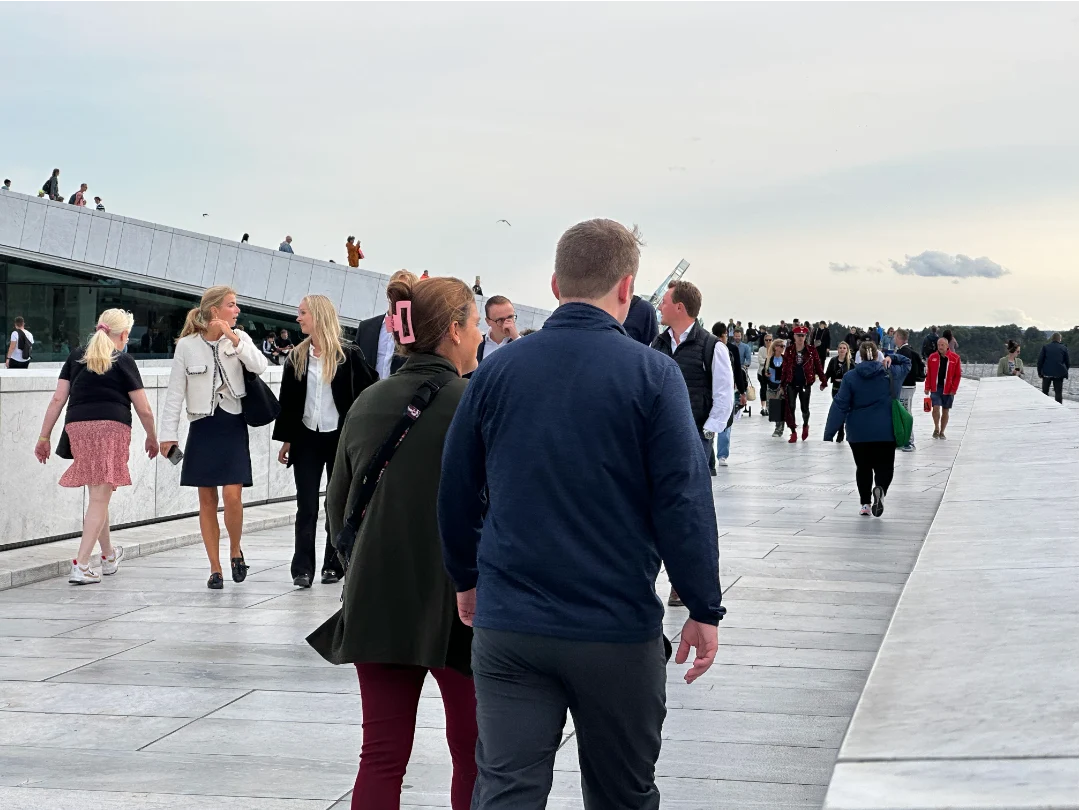
Sheri Berman believes that the solution for democracy lies in rebuilding its social foundations. If so, the unhealthy culture within the emerging political industry must be addressed, writes Oagal. (illustrative photo).
Political science professor Sheri Berman at Barnard College writes in the Journal of Democracy that the crisis of democracy should have been predictable. She argues that the solution lies in rebuilding the social foundations of democracy—particularly by reducing inequality and strengthening a sense of shared community—and that institutions without this will remain vulnerable. Oagal shares the diagnosis of democratic weakening but disagrees on causation: The emergence of a political industry with aristocracy-like traits is a key contributor to the social inequalities and problems that Berman uses to explain democracy’s decline.
Publisert: 18. Apr 2026 Revidert: 14. Apr 2026
In a newsletter, Journal of Democracy highlights Sheri Berman’s article as one of three that “must be read” in the magazine’s April issue. That the publication highlights the article is not accidental. That democracy is under pressure globally is now widely recognized and a source of growing concern. The question is no longer whether democracy is weakening—but why it is happening, and what is actually required to reverse the trend.
See also: Oagal’s point-by-point model for strengthening democracy
Sheri Berman argues that the answer lies in history. Democracies develop in waves: progress followed by setbacks. Her key point is that stable democracies have never been the result of institutions alone. They rest on social foundations—a strong middle class, moderate inequality, social mobility, and a shared sense of fate. When these foundations weaken, democracy weakens as well.
Sheri Berman finds the explanation for democratic decline in history
She points in particular to developments in Western countries over recent decades: rising inequality, declining social mobility, and a growing division of societies along political, social, and geographic lines. At the same time, the shared understanding that “we are all in this together” has weakened. The result is increased polarization, lower trust, and greater acceptance of violating democratic norms. In this context, attacks on institutions are not the cause, but the end stage of a longer development.
Berman’s solution follows directly from her analysis: Democracy’s problems cannot be solved through institutional reform alone. The underlying social and economic conditions must be addressed—inequality must be reduced, mobility strengthened, and a sense of shared community rebuilt. Without this, even well-designed institutions will remain vulnerable.
Oagal has described a similar development, but with the opposite direction of causality. In modern times, democracies emerged alongside the weakening of aristocracies and monarchies. Now we see how similar powerful circles are once again contributing to a gradual erosion of accountability and balance of power. At the same time, the middle class—an essential pillar of democracy—is weakening, pushing several major democracies into a late stage of development. The need for correction is urgent.
Read more: What are the consequences when NGOs are publicly controlled (GCNGO)?
Is democracy being socially weakened by a new aristocratic culture?
Where Berman explains why democracy becomes vulnerable, Oagal focuses on what happens within this vacuum. When democracy weakens socially, the space is filled not only by polarization and discontent, but also by a growing, self-protective political and administrative structure. This development is harder to detect, but crucial to understand. It is also a question whether powerholders with aristocracy-like traits in this party-driven political industry are in fact driving the social weakening—rather than emerging as a consequence of it.
It is also a question whether powerholders with aristocracy-like traits in this party-driven political industry are in fact driving the social weakening—rather than emerging as a consequence of it.
The difference in perspective is therefore not merely academic. If one views democracy’s problems solely as a result of social conditions, one risks overlooking how power is actually exercised and consolidated within the system. Oagal’s perspective is that real improvement requires addressing both levels: the social foundations and the concrete structures that govern decision-making, accountability, and power in practice.
De fleste av artiklene på Oagal er utarbeidet av redaksjonen. Innholdet fra redaksjonen er det fortløpende redaksjonelle arbeidet i Oagal. Redaksjonen driver undersøkende journalistikk, utvikler ideer til saker og utarbeider artikler ved hjelp av ulike tilgjengelige kilder og verktøy. Meningsbærende innhold og også reportasjer bærer skribentens navn.


0 Comments