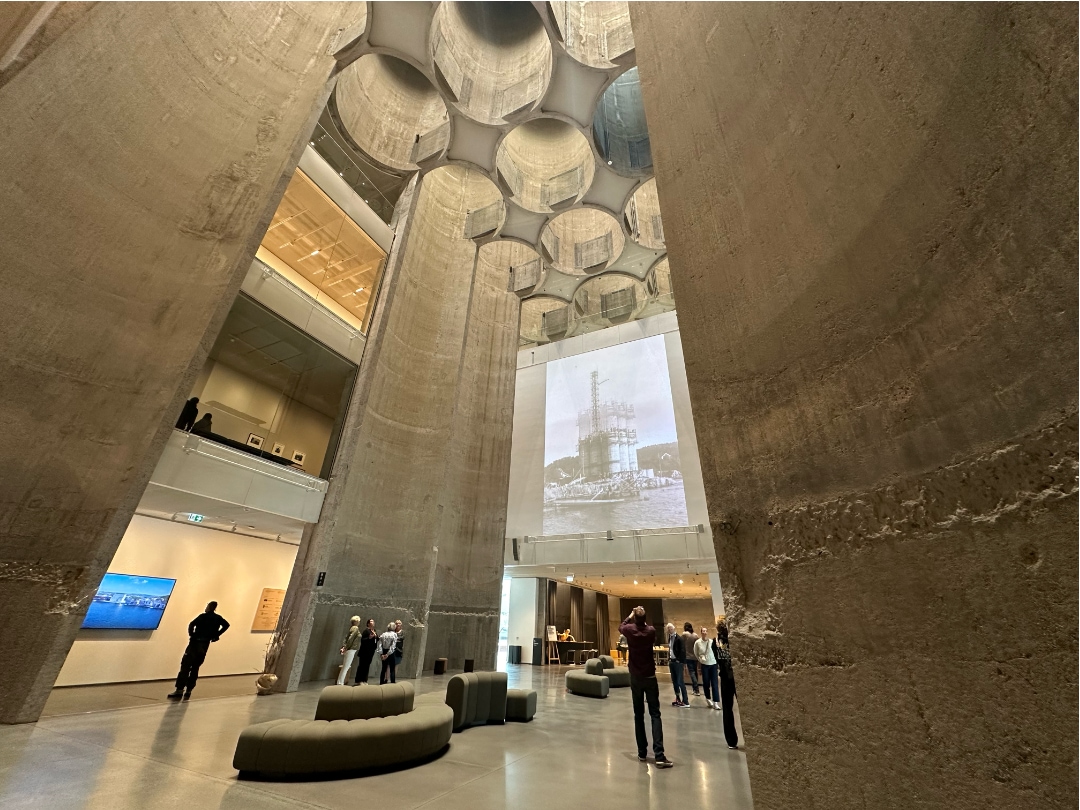
Deliberative democracy can take responsibility for assessments, decision-making, and implementation in many areas, such as evaluations and budgeting related to public projects. Illustrated here by the Art Silo in Kristiansand.
Deliberative democracy holds great potential to strengthen popular democracy. Responsibility for assessments, decisions, and implementation can be delegated to assemblies similar to the Sámi Parliament. The involvement that deliberative assemblies represent will bring citizens closer to societal governance and enhance the foundation for decision-making.
Deliberative processes can contribute to more thoughtful, fair, and inclusive decisions across levels of society. This form of democracy offers a way to foster broader participation and accountability. At the same time, people are given the opportunity to influence decisions that directly affect their lives. It serves as a valuable complement to more formal democratic mechanisms such as referendums and citizen initiatives.
Read more: In deliberative democracy, decisions are made and implemented by informed citizens.
Examples of issues suited for deliberative democracy
Deliberative democracy can be applied to many types of issues, such as public inquiries, aesthetic choices, and budgeting.
- Public Inquiries
Deliberative assemblies can replace or supplement today’s committees, which are often small and dominated by politicians. By using representatively selected citizens, public inquiries can become more inclusive and reflect a broader range of opinions and experiences. This can lead to more balanced and thorough decisions, and foster broader public acceptance of the outcomes. - Aesthetic Choices for Cities and Towns
When it comes to aesthetic decisions that affect cities and towns, deliberative processes can help involve citizens directly in matters related to the design of public spaces, architecture, and green areas. This can be an effective way to ensure that urban development aligns with the local community’s wishes and values, in accordance with the Planning and Building Act’s aesthetic provision §29-2, and to prevent such decisions from being made solely by caseworkers, developers, technical experts, politicians, and others without ties to the local community. - Budgeting and participatory budgeting
Deliberative processes can be used in budgeting, especially at the municipal level or within specific areas of a municipality. Participatory budgeting is used in many parts of the world and can give citizens the opportunity to prioritize how public funds should be allocated. This can lead to better solutions, increased accountability, engagement, and stronger ties to the local community. - Budget Management Within Defined Areas
The Sámi Parliament’s management of budgetary funds is an example of how deliberative democracy can be used to govern public resources. This type of model can be extended to other areas and contexts where complex interests and needs must be balanced. - Input to Municipal and County Committees
Deliberative councils can involve citizens in more in-depth dialogue on issues and provide input to committees at the municipal and county levels. This will enhance the quality and legitimacy of decisions by drawing on citizens’ expertise and giving elected officials better insight into what voters consider important. - Coparticipation in Zoning and Development Plans
Although Section 1–1 of the Planning and Building Act clearly states that all affected parties shall be allowed to participate, coparticipation is often bypassed by authorities and politicians. As a result, work on zoning and development plans for cities and towns often creates tension between developers, local governments, and residents. Responsibility for public involvement can be delegated to deliberative groups from the beginning of the planning process. Local district councils, for example, can serve as such groups or as hosts for deliberative groups. These districts or groups can gather local knowledge, clarify misunderstandings, and help find solutions that balance various interests. Deliberative processes will help reduce conflicts. With a consensus-based foundation for decisions, resolutions passed by municipal councils will become less controversial. - Deliberative Democracy in Schools
In schools, deliberative processes can involve students, teachers, and parents in decisions about the school environment, teaching methods, and priorities. This gives those most affected by school activities a stronger voice and greater ownership of the decisions being made, and ensures broader involvement than traditional parent councils. - Local Business Development
When establishing new businesses—especially within economic development that impacts many local communities—deliberative processes can help gather local knowledge and preferences. This can help ensure that new enterprises develop in line with the community’s needs and values. - Juries for Public Projects
Deliberative democracy can replace juries that are currently often composed of individuals with ties to politics, architecture, and the arts. Instead of relying on such elitist jury compositions, the expertise they represent can be included in deliberative forums where citizens ensure much broader representation. Architectural competitions for public buildings, the decoration of public spaces, and sculptures or installations in urban environments are all areas well suited for deliberative democracy. - Oversight Bodies
Today’s political industry operates beyond the people’s control. Oversight committees are filled with politicians, and seemingly independent ombudsmen are largely led by former politicians (once a politician, always a politician). Deliberative assemblies are well suited to evaluate matters based on facts rather than strong political preferences, as is often the case today. - Review and Summary of Public Hearings
In public hearings, the review and summary of input are often carried out by the same individuals who drafted the hearing materials. By definition, they are not in a position to objectively evaluate the feedback. Deliberative assemblies can conduct the review and conclude which changes need to be made. They can also assess whether the hearing involved a sufficiently representative range of participants.
De fleste av artiklene på Oagal er utarbeidet av redaksjonen. Innholdet fra redaksjonen er det fortløpende redaksjonelle arbeidet i Oagal. Redaksjonen driver undersøkende journalistikk, utvikler ideer til saker og utarbeider artikler ved hjelp av ulike tilgjengelige kilder og verktøy. Meningsbærende innhold og også reportasjer bærer skribentens navn.


0 Comments